
The 4 Wavelengths, Explained: What Each One Does for Your Skin
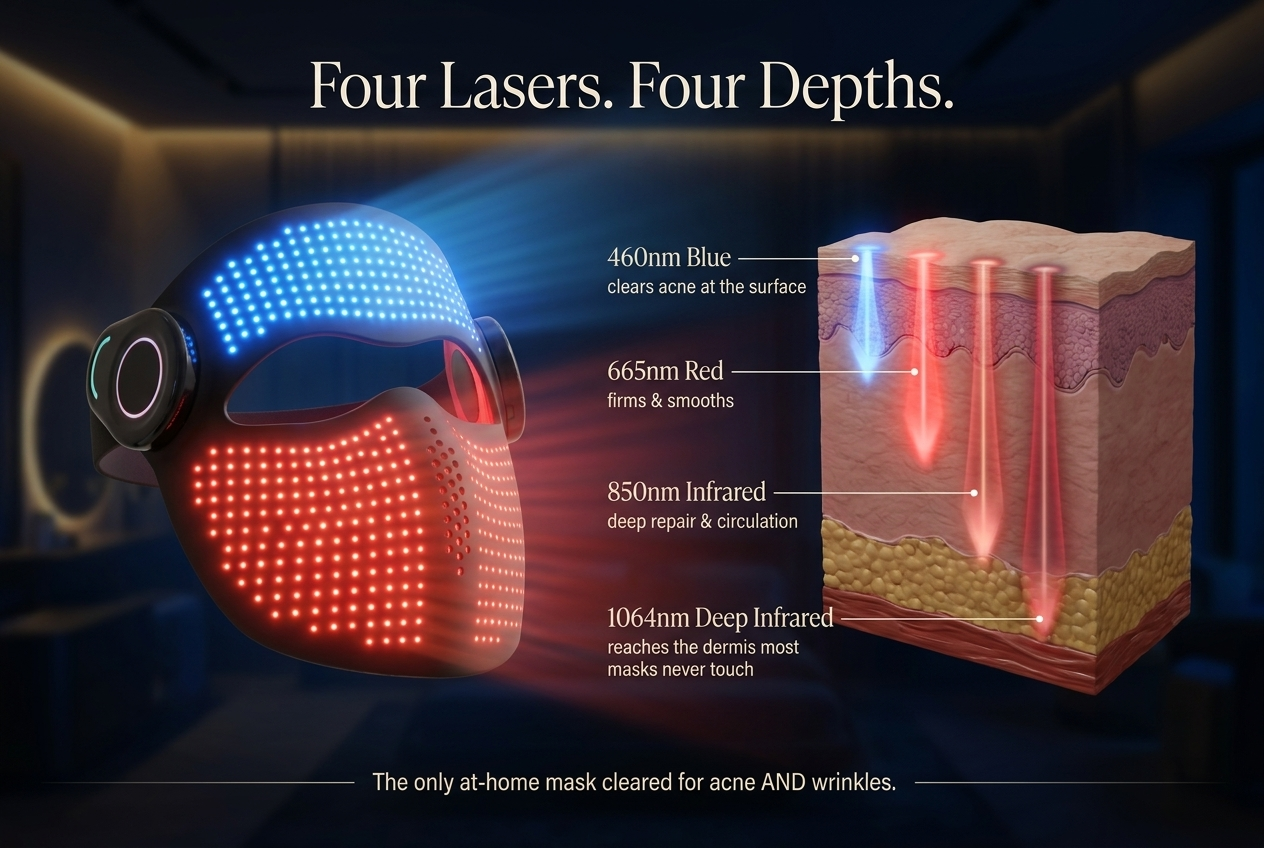
"Four wavelengths" sounds like a spec-sheet flourish. It isn't. Each wavelength reaches a different layer of skin and does a distinct job — which is exactly why single-wavelength masks plateau. Here's what each one is for, in plain English.
665nm — the collagen wavelength
This red VCSEL laser reaches the dermis and activates fibroblasts, the cells that produce collagen and elastin. This is the wavelength most associated with firmer, more elastic-looking skin over time.
850nm — repair and circulation
Near-infrared light penetrates deeper still, supporting circulation and helping the skin look restored and hydrated. It's the quiet workhorse of the protocol.
1064nm — the deep wavelength
The deepest of the four, this near-infrared laser reaches toward the lower layers where surface treatments simply can't go. It's associated with a smoother, more lifted appearance — and it's the same wavelength category used in professional tightening devices.
460nm — clarity and balance
The clinical blue light targets the surface: it addresses blemish-causing bacteria and helps balance the skin's oil production. It's why the protocol works for clarity, not just firmness.
Why all four, together
Skin health isn't a single-wavelength problem. Most at-home devices pick one or two wavelengths to keep manufacturing costs down. The Velove LaserPro 4 runs all four — three VCSEL lasers plus clinical blue light — in one automated 40-minute session, so every layer gets addressed in a single sitting.
This article describes the appearance of skin and is educational in nature. Individual results vary.
Beyond LED. This is clinical.
Three VCSEL lasers + clinical blue light · 90-day results guarantee · from $84/mo
Shop the LaserPro 4